
Built to Evolve: What HUSIKA Shows About Modular Digital Infrastructure
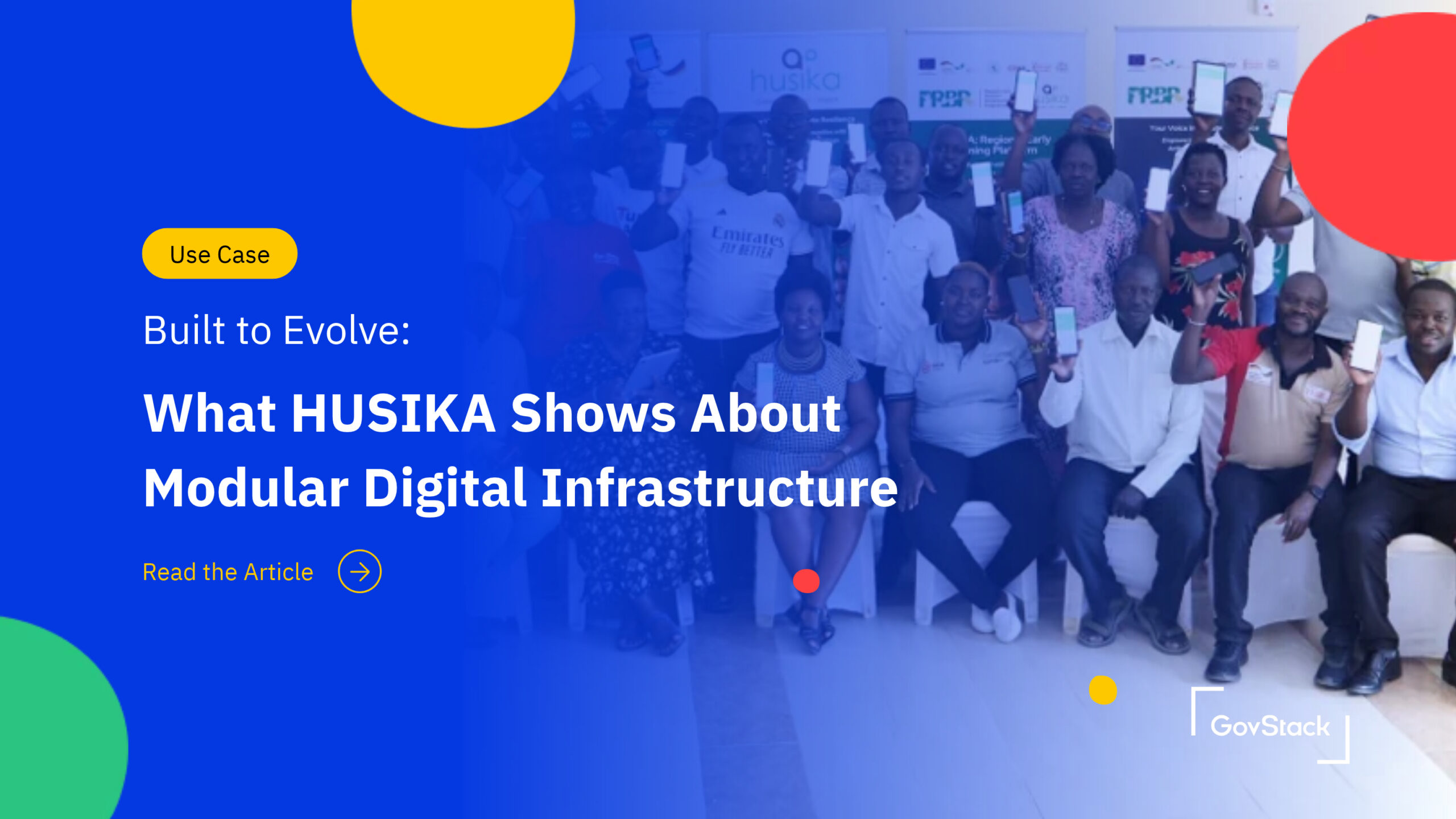
“Producing an accurate forecast is only the beginning of an effective early warning system.”
A forecast only creates value when it reaches the people who need it, early enough to act and in a form they can understand. In Eastern Africa, this can mean communicating across countries, languages and levels of connectivity. HUSIKA was developed to help close that gap. The platform connects institutions producing authoritative climate and early-warning information with the media, public authorities and communities that use it. Today, it lists active deployments across 11 countries and various channels like web, SMS and Telegram.
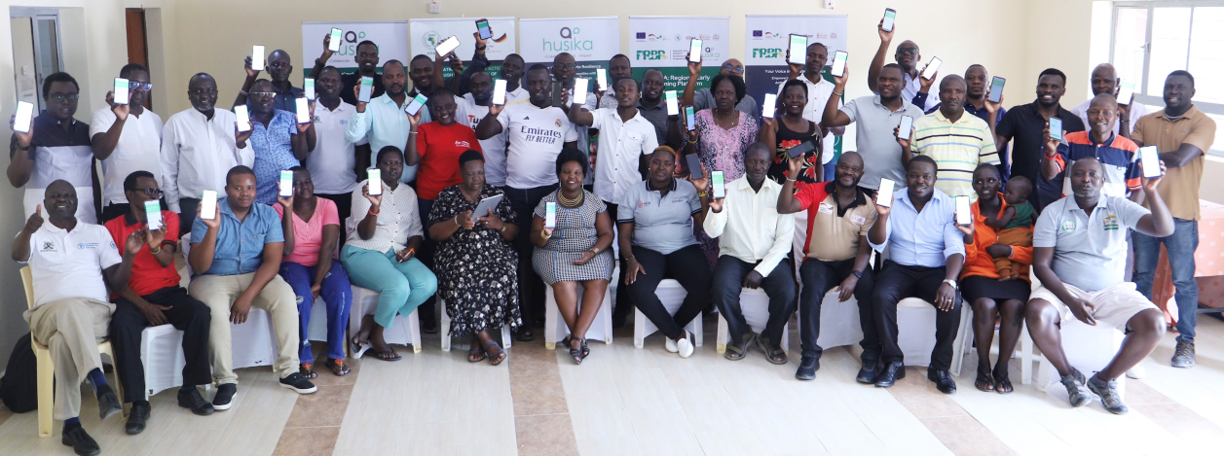
In South Sudan, for example, access to HUSIKA was provided to the South Sudan Meteorological Service as part of a training with journalists. Participants worked with an official seasonal forecast and translated it into radio bulletins, television reports, social-media messages and print content. The exercise reflected a central principle of early-warning communication: it is essential that the information reaches people in a format they can understand and use to make decisions.
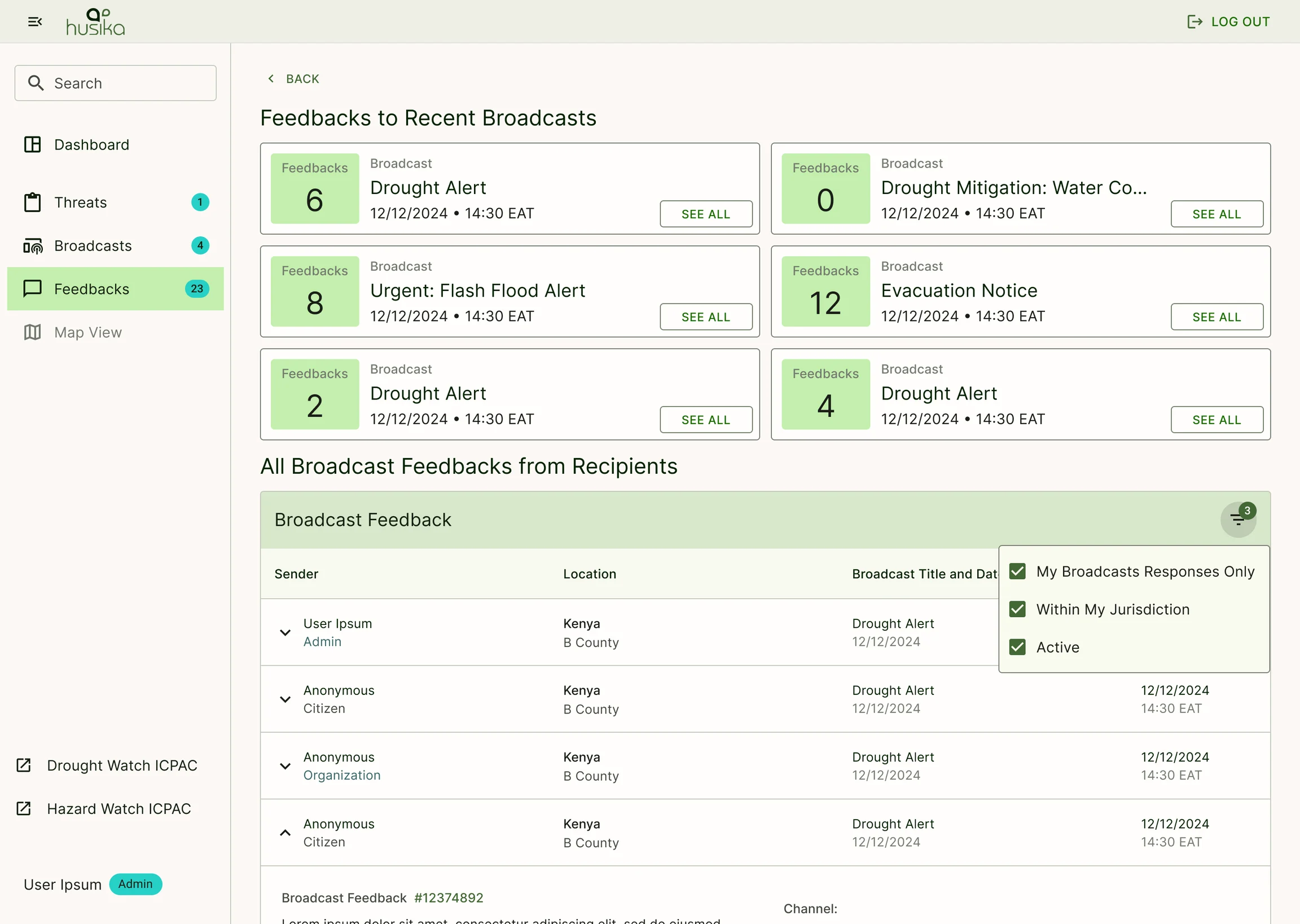
As part of ensuring effective and efficient delivery of early warning, Emmanuel Qurino from the South Sudan Meteorological Services reflected how early warning information was disseminated as door-to-door printed posters limiting reach and last mile delivery. He acknowledges that Husika has enabled quick and effectivery delivery of early warning information as SMS and through web and mobile application enabling reach to large number of people at a go.
This example also shows why HUSIKA cannot be designed around a single channel, institution or user group. It must support different formats, languages and channels and continue to evolve and scale to new contexts. For government digital teams, this raises a familiar question: how can a system add new functions and serve new contexts without repeatedly rebuilding its foundations? This is where GovStack’s modular approach becomes relevant.
Why Modularity Matters
HUSIKA does not produce forecasts or independently issue official warnings. HUSIKA provides the infrastructure through which official authorities can prepare and distribute verified information.
A typical process begins with emerging information about a possible hazard. An authorized official reviews and validates it, prepares a broadcast, selects the relevant language and geographical area and sends the warning through an appropriate channel. Depending on their context, recipients might receive an SMS, an app notification or information through the web. To the recipient, this can look like one continuous process. Behind it are several distinct capabilities: receiving and storing information, applying approval rules, identifying recipients, exchanging data between services and delivering messages.
Keeping those capabilities separate is central to the system’s ability to evolve. If every function is tightly connected inside one large application, changing one part can affect the entire system. Adding a channel, connecting a new source of information or replacing a component may then require extensive redevelopment. The GovStack approach breaks common government capabilities into modular Building Blocks with defined functions and interfaces. Instead of one application doing everything, separate components work together to support the complete service. This allows individual parts to be adapted or replaced without automatically redesigning everything around them.
What modularity makes possible
The value of modularity becomes clear when a system needs to evolve and scale. If messaging is separated from threat management, a team can add or replace a communication channel without affecting other components. Components can also be adapted to new national structures or re-used when adding completely new functions.
HUSIKA’s planned use for cross-border animal-health surveillance illustrates this potential. Animal-health authorities are working to improve the exchange of information on priority transboundary animal diseases. The aim is to connect national surveillance systems with HUSIKA so that a signal detected in one country can become a warning available across the borderland cluster rather than remain in a national database. This is the kind of challenge modular components and interoperable interfaces are designed to address: Using the capabilities of the early warning platform for an entirely new service.
“HUSIKA’s modular design makes it a natural partner for MoDiaC (Human Mobility in the Context of Disasters and Climate Change), a regional initiative helping communities and authorities anticipate climate-related displacement. Under MoDiaC, ICPAC is developing the East Africa Mobility Watch, a platform that forecasts where displacement risks may be rising. Once it is ready, HUSIKA could share these outlooks alongside climate warnings without rebuilding the system, with official authorities still approving each message. A risk identified on one side of a border could then reach communities on both sides in time to act.”
What other digital government teams can learn
Like in the case of HUSIKA, many digital public services need to receive information from trusted sources, apply rules and approvals, identify particular users, communicate through different channels and receive information in return. The lesson is to identify the capabilities the service requires, examine which of them already exist and structure the system so that individual parts can evolve independently. Standard specifications and interfaces then make it easier to reuse components, combine different technologies and avoid building every new service from scratch.
For readers who want to see how this can work technically, the GovStack Sandbox provides an Early Warning Tech Demo based on one of HUSIKA’s core processes. Visitors can follow a threat from ingestion and validation to the creation and distribution of a broadcast, while a backend visualization shows how information moves between the services and Building Blocks. The public demo is a non-production learning environment, not the complete live HUSIKA platform. Its architecture, documentation, source code and deployment resources are openly available:
Access Demo: GovStack Sandbox – Early Warning
Technical Documentation: Early Warning – Tech Demo | sandbox
HUSIKA shows why a modular architecture matters in practice: a system can address an immediate public need while remaining open to new channels, contexts and uses in the future.