
From GovStack Principles to Practice: Connecting Kenyan Farmers with Markets through Mkulima Bora
Kenya is putting GovStack into practice to support the development of a digital agricultural marketplace that better connects farmers with markets and services. Rather than building a platform that solves only today’s needs, the approach uses reusable digital components and common standards so the service can connect with existing systems, be adapted and grow over time.
Giving farmers more options
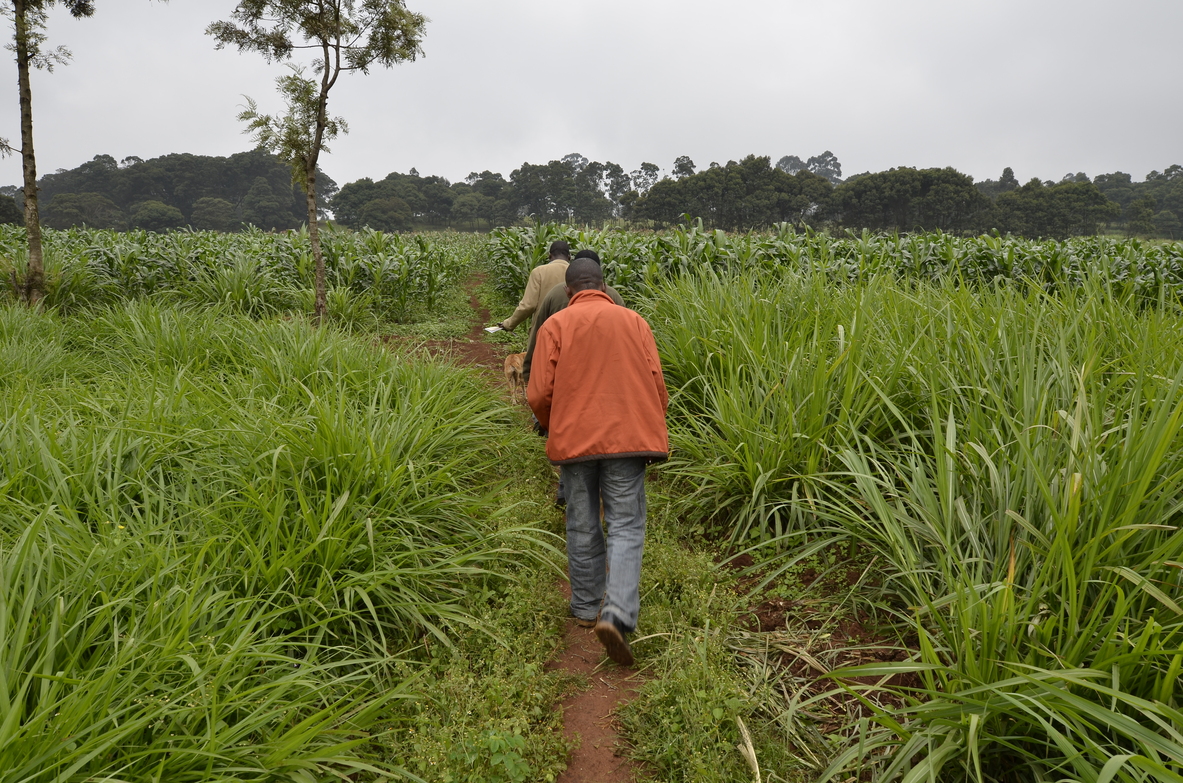
For many smallholder farmers in Kenya, reaching the market can be difficult. They often depend on brokers for market access, have limited visibility of market prices and no reliable way to verify who they are trading with. Fake or low-quality seeds and fertilizers can be difficult to identify, crops can go to waste when farmers cannot find buyers in time, and there are not enough government agricultural advisors to provide every farmer with support in person.
Mkulima Bora is a digital agricultural marketplace built by Nanocomputing Limited in partnership with GIZ and county governments across Kenya’s Rift Valley. It addresses many of these challenges by connecting farmers directly with buyers and verified suppliers. Farmers can offer their produce directly to bulk buyers, compare opportunities and negotiate offers.
As Josphat Ruto, a farmer from Bomet County, puts it:
“I no longer accept the first price offered — I can wait for a fair one.”
For farmers such as Daniel Kiplagat from Uasin Gishu County, the platform also provides information that was previously difficult to access:
“I can check prices from other wards before I agree to sell, something I never had before.”
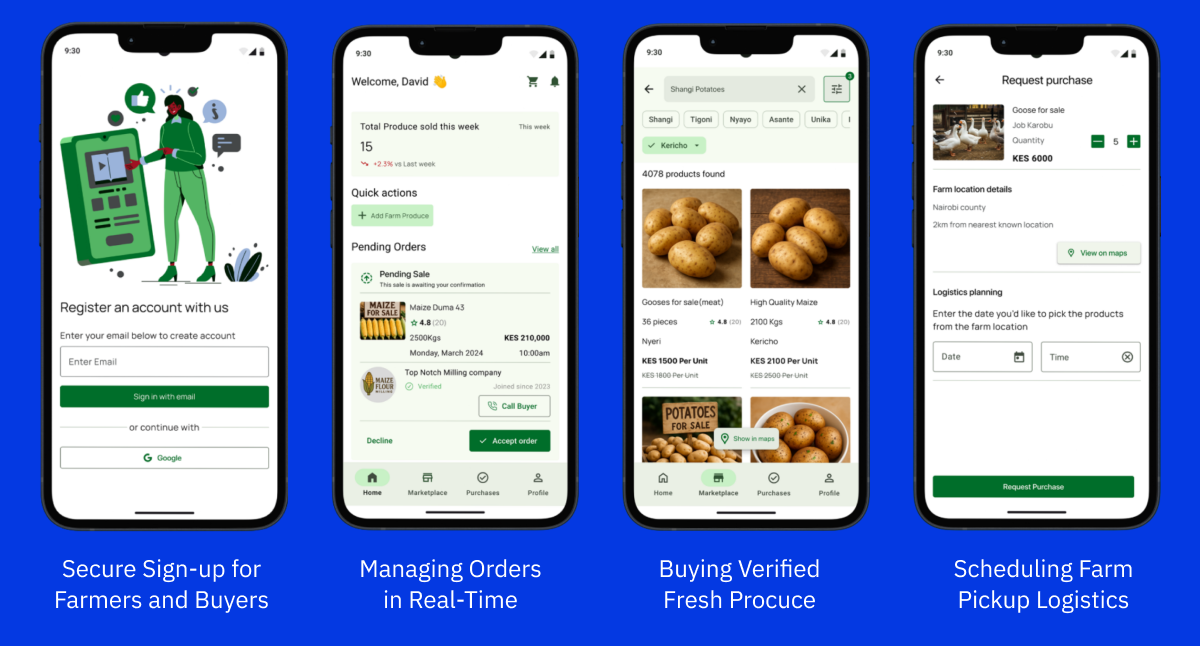
Buyers can search for produce by county, sub-county and ward, including through a map view. Once a farmer and buyer agree on an offer, pickup and logistics can also be arranged through the platform. Farmers can furthermore access verified agricultural inputs, such as seeds and fertilizers.
Making the service easier to connect, adapt and scale
Behind Mkulima Bora is an important design choice: instead of creating a closed, standalone system, the developers applied GovStack’s approach of designing digital services around users, reusable components and open standards. For farmers and public administrations, this is intended to create a service that is easier to use, connect to existing infrastructure and expand to new locations.
In practice, the platform brings together functions such as registration, consent management, digital registries, an online marketplace, messaging and scheduling. Because these functions are modular, they can work together while also connecting with existing government infrastructure—avoiding the need to build the same capabilities again.
One concrete example is registration. Mkulima Bora integrates with Kenya’s Integrated Population Registration System (IPRS) to verify farmers, buyers and aggregators during onboarding. This helps users know who they are trading with and makes participation in the marketplace more trustworthy. County administrations can also approve suppliers and manage extension officers locally, reflecting Kenya’s devolved government structure.
The platform itself was developed as an open-source solution using Python and Flutter. Combined with modularity and open standards, this makes it easier for others to collaborate on the solution, reuse individual components and adapt the platform in the future.
Designed to grow beyond the pilot
Mkulima Bora is currently being piloted in Bomet, Kericho, Nandi, Uasin Gishu and Elgeyo Marakwet, with more than 1,000 farmers, buyers and aggregators registered on the platform.

While the platform is currently available in five counties, it was designed with expansion in mind. By applying GovStack principles from the start, the approach can be reused and adapted for other counties without having to develop a new system for each location. This could allow more farmers to benefit from better access to buyers, market information and verified suppliers as the platform expands. At the same time, modularity, open standards and open-source development are intended to reduce future costs and dependence on a single technology provider.
Mkulima Bora shows what GovStack can mean in practice: not technology for its own sake, but digital services designed to respond to people’s needs, connect with existing systems and reach more users over time.