
Building a National Digital Architecture: How the Dominican Republic is Using GovStack
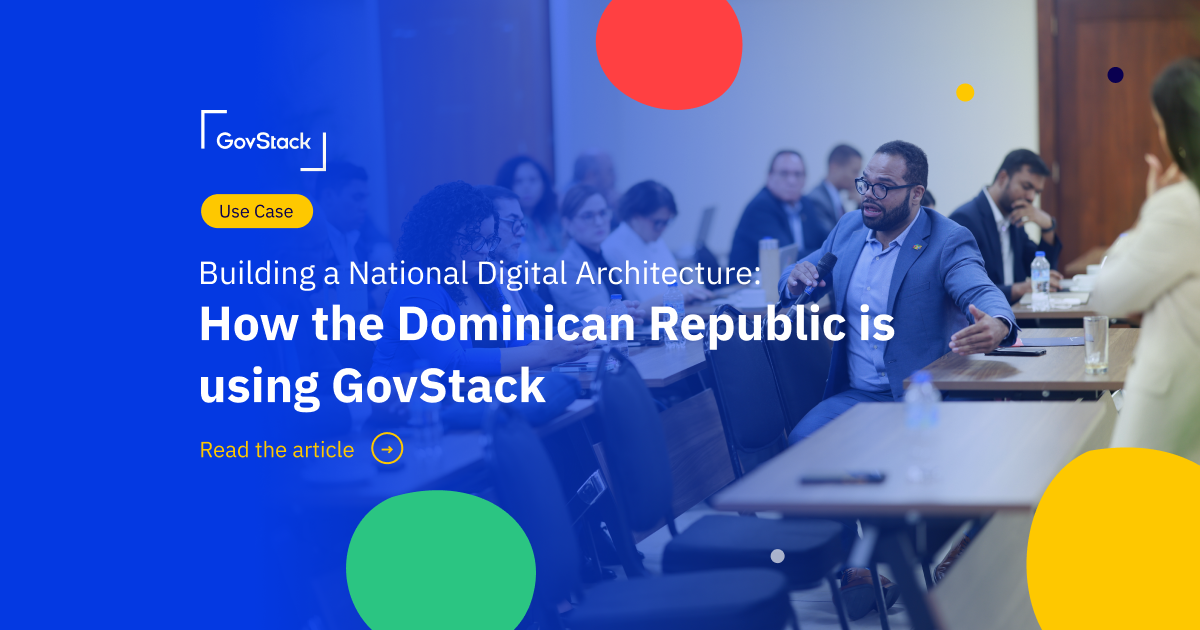
The Dominican Republic is using GovStack as a reference for developing its emerging whole-of-government digital architecture. One particularly inspiring aspect of this story is that the Dominican Republic began exploring GovStack independently, which highlights the value of GovStack’s open and self-service approach.
We spoke with Armando J. Manzueta Peña, Vice Minister for Public Innovation and Technology at the Ministry for Public Administration, about how they first discovered GovStack, why the PAERA framework became particularly valuable and how the GovStack approach is being adapted to national priorities.
How did Armando and his team first come across GovStack?
Armando J. Manzueta Peña came across GovStack in 2022. He quickly saw the potential of what GovStack brought to the table, as the team was already working on a way to connect different digital initiatives into one coherent government architecture. As he puts it: “GovStack became a guide for how we could deploy this faster.” This understanding was further strengthened through his participation in GovStack workshops with ITU in 2024, where the team explored how to adapt the Building Block approach to the Dominican Republic’s institutional and regulatory context.
What aspects of GovStack have been most valuable from the Dominican Republic's perspective?
The Ministry of Public Administration under the leadership of Minister Sigmund Freund, used a range of GovTech resources to develop their approach. The team has used its building-block approach, technical specifications and implementation resources to support the transition from isolated digital projects toward a more modular, interoperable and reusable government platform model. The Public Administration Ecosystem Reference Architecture (PAERA) was particularly useful because it connects governance, enterprise architecture and technology. It helps explain not only what digital capabilities governments need, but also how they relate to each other and how they should be introduced over time.
For Armando however, the biggest value was not a single specification:
“From our perspective, GovStack has provided more than a set of technical specifications; it has offered a common architectural language through which we can organize reusable capabilities, strengthen interoperability, and gradually move from fragmented institutional solutions toward a coherent whole-of-government digital architecture for proactive service delivery.”
How is the Dominican Republic putting GovStack into practice today?
GovStack principles are informing several parts of the Dominican Republic’s digital transformation program. This includes the development of a national DPI architecture that serves as a common reference across government while allowing sector-specific implementation in areas such as national human talent, planning and finance management, health and social development. Building on this foundation, they are designing shared digital capabilities for identity, data exchange, payments, notifications, digital signatures and verifiable credentials. They are also modernizing the national government portal toward a user-centered service platform and using GovStack principles when preparing technical requirements for future digital platforms and procurement. Rather than developing standalone systems, they are building their Digital Public Infrastructure program around open standards, interoperability, security, privacy and vendor neutrality.
“We're also adopting the philosophy of using Building Blocks to create new public services. At the same time, we're leading a major effort to re-engineer our national services portal around those specifications and architectures, using certified platforms from the GovStack marketplace for the use cases we want to build.”
What advice would Armando give to other governments exploring the GovStack approach?
Armando emphasizes that governments should use GovStack as a guide, learn from the wider community and adapt the approach to their own circumstances.
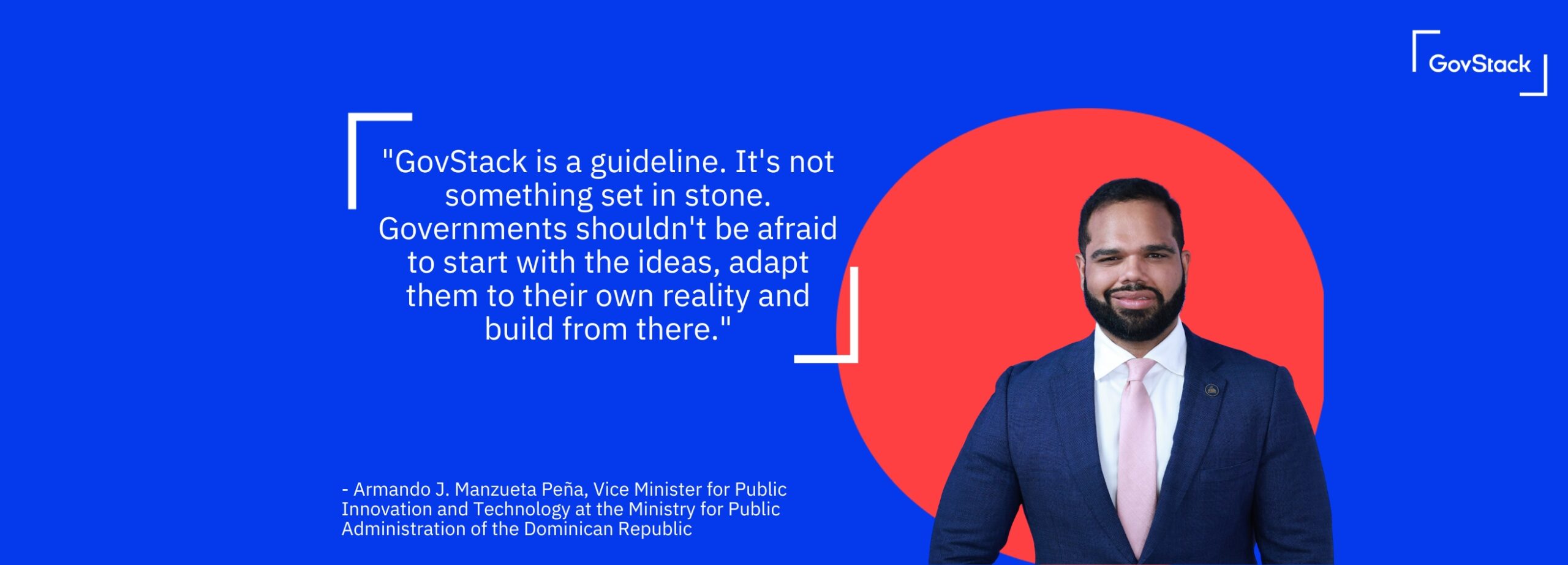
“GovStack is a guideline. It’s not something set in stone. Governments shouldn’t be afraid to start with the ideas, adapt them to their own reality and build from there.”
He also encourages governments not to be afraid to ask for help and draw on the expertise of the wider GovStack community. Working directly with experts who contributed to the development of GovStack specifications has helped the Dominican Republic translate technical guidance into national policies and adapt international standards to its own context.
“We’re leveraging that knowledge to translate those specifications into actual policies and adapt them to our national realities.”
What's next for the Dominican Republic’s GovStack journey?
The Dominican Republic continues to expand its Digital Public Infrastructure ecosystem while strengthening interoperability and reusable government capabilities. The country is also looking to deepen its engagement with the GovStack community through technical working groups and knowledge exchange. Looking ahead, Armando sees this work as laying the foundation for long-term digital government.
“We see this not only as the adoption of GovStack principles, but also as an opportunity to demonstrate how the model can support digital sovereignty and sustainable public-sector transformation at scale.”
The Dominican Republic’s journey illustrates one of the core ideas behind GovStack: Open standards and reference architectures are most valuable when they can be adapted to local contexts. They provide governments with a common foundation on which they can build interoperable, reusable and citizen-centered digital services.


