
Mozambique’s First Women in GovTech Challenge: From Concept to Prototype in Five Days
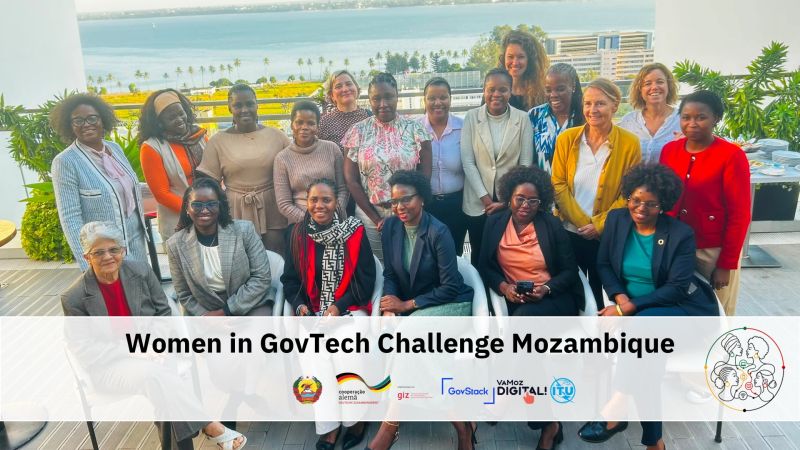
In Maputo this month, twenty women from across Mozambique’s public sector came together for the country’s first national Women in GovTech Challenge — Desafio Mulheres em GovTech 2026. Over a single, intensive week, they moved from the foundations of digital government to fully-formed concepts for real public services, presented to a jury on the final day.
The programme is a joint initiative by the GovStack Initiative, GIZ Mozambique, and the ITU Regional Office for Africa (under the “Laying the foundation for VaMoz Digital!” project). It ran in two phases: the first half online, the second onsite in Maputo.
Twenty women, one room, every key institution
The 20 participants were nominated by Mozambique’s leading public institutions, including INTIC, the Ministério das Comunicações e Transformação Digital, MAEFP, CEDSIF, the Tribunal Administrativo de Moçambique, and many more. They brought a wide range of experience and perspectives. the mix a challenge like this needs.
Building the foundations, step by step
The week began with the building blocks of digital government and Digital Public Infrastructure, an inside look at Mozambique’s Digital Transformation Strategy currently being developed with ITU, and an exploration of how GovStack’s Building Block approach can help governments navigate their digital journey.
From there, the programme moved into data and design: why registries are the backbone of digital services, what the “once-only” principle means for citizens, and how the GovStack design process — grounded in principles like design for everyone — keeps people at the centre from the very first step.
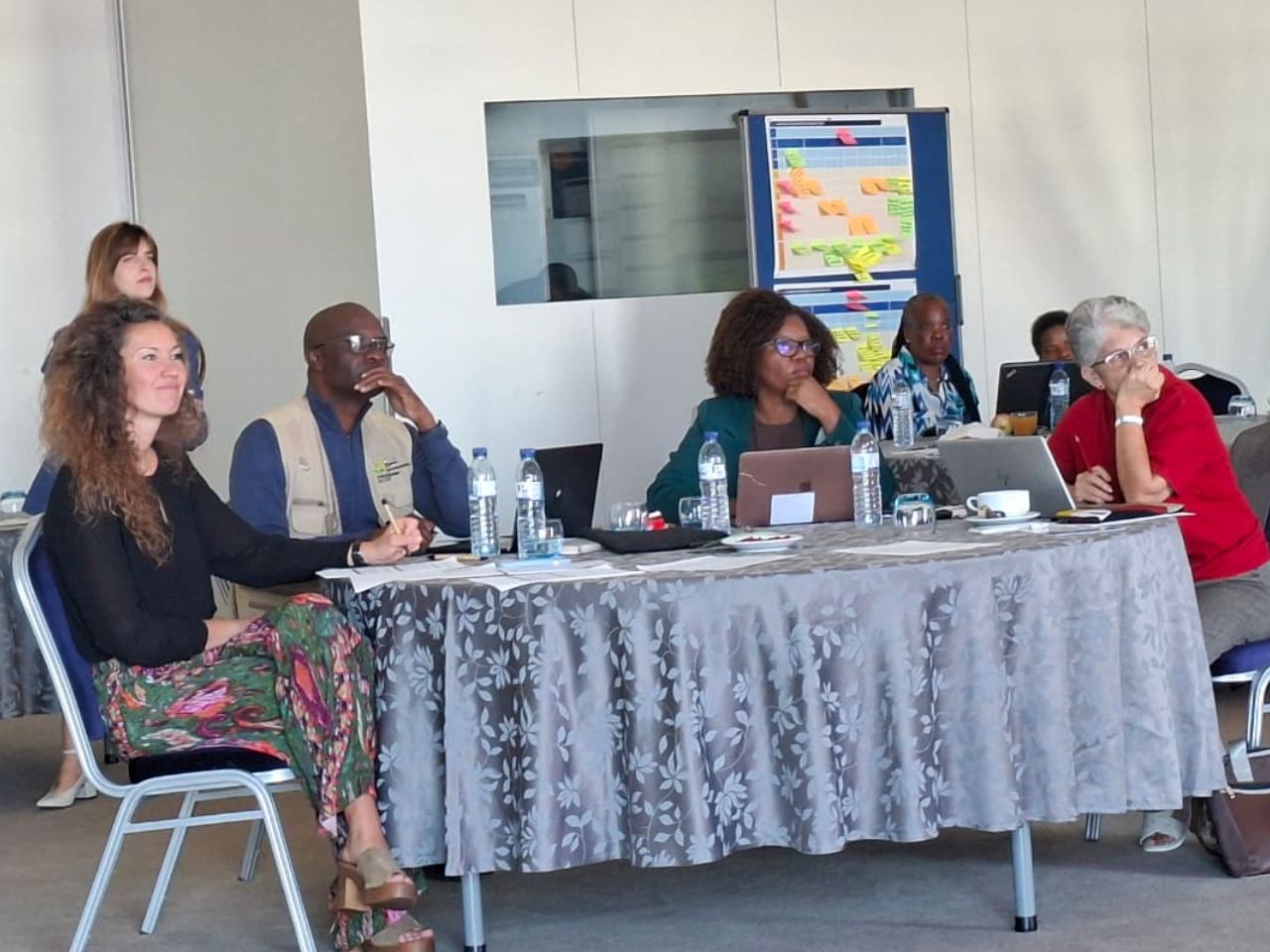
Throughout the week, participants worked alongside two GovStack service providers: Claudia Cristina Pollina, Service Design Expert and a mentee of the last Global Women in GovTech Challenge, and Paulo Sérgio Amaral, Digital Transformation Consultant at UNDP and the UN Technology Bank. Day by day, they guided the groups through the full GovStack methodology — from stakeholder mapping and as-is journey analysis to problem statements, value statements, and finally a vision for the future service.
The final two days belonged entirely to the participants. Working in their groups, they took everything they had learned and turned it into something concrete — developing their service redesign concepts from scratch, making decisions, challenging each other, and shaping a vision they could stand behind and present with confidence on Pitch Day.
Learning from the world: Inspirational sessions 💡
Inspiration came from near and far. A session on international best practices brought examples from Brazil, Portugal and Cabo Verde — countries at different stages of their own digital transformation journeys — offering participants a concrete sense of what is already working and what lessons can be carried into the Mozambican context.
One session went straight to the heart of a question central to digital government: how do you make citizen participation truly inclusive when internet access is still a barrier? Nil Homedes Busquets, Director of DECIDIM, and Alejandra Gonzalez-García, Member of the DECIDIM Coordination Committee and GovStack Release Manager, together with Patricia Rafael (Instituto para Democracia Multipartidária – IMD) and Iazalde Martins (Universidade Eduardo Mondlane), shared their experience building Cidadão Participa — a platform that lets citizens share opinions, follow initiatives, and contribute to Mozambique’s Diálogo Nacional Inclusivo.
Their answer to the digital divide was elegantly practical: a WhatsApp chatbot. In Mozambique, where many mobile operators offer affordable WhatsApp-specific data packages, this makes participation accessible to far more citizens than a standard web platform ever could. It was a powerful reminder that inclusion has to be designed in from the very first step — a principle at the core of GovStack, and exactly what participants were putting into practice all week.
From challenge to prototype
After five intense and inspiring days, four teams took the stage to present their service redesign concepts to the jury. Their visions spanned the breadth of public life, from birth registration and social support for newborns, to territorial tax payment and access to employment. The level of work that came together in just five days was remarkable.
The jury composed by Virginia Videira (CEDSIF), Luis Neves (CIUEM), Ivone Muocha (CITT), and Martha Mundas (GovStack), evaluated each concept thoroughly. The closing ceremony was joined by Kirsten Focken, Country Director of GIZ Mozambique, and Anne Doose, Programme Manager of the Good Governance project.
A standout team: MuniciPay
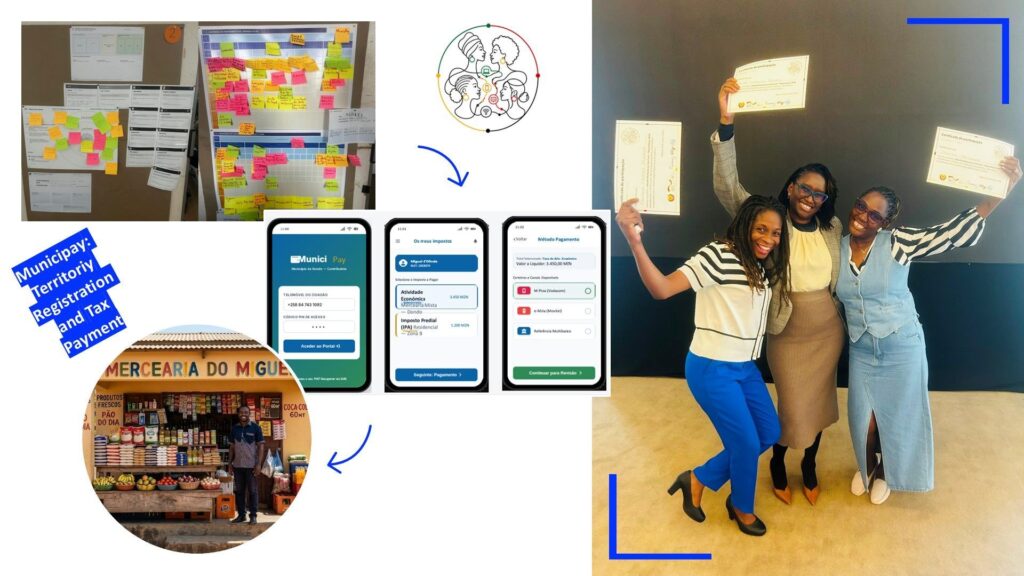
Out of four strong groups, one stood out in a particularly remarkable way. 🏆 Nilza Rafael (CEDSIF), Taimila Camilo Muiene (MAEFP), and Josefa Miclasse (Dondo Municipal Council) won with their concept “Municipay”: a redesign of land registration and tax payment services. The jury recognised the team for the depth of their problem analysis, the clarity of their solution, and the concrete vision they brought to the table.
But the real story was seeing the Mozambican community come together. Every participant did outstanding work, especially given the limited time. The dedication, the courage to question existing processes, and the ambition to put the citizen at the centre.
May this be the first national Women in GovTech Challenge in Mozambique of many. 🌱
Acknowledgements
A heartfelt thank you to Claudia Cristina Pollina and Paulo Sérgio Amaral for their outstanding work preparing the participants throughout the week, and to Lucía Álvarez-Uría Miyares, Herminia Fernandes-Samuel, Nélia Geraldo Nhavoto, Martha Mundas, Christine Sund, and Anne Doose for making the challenge possible. Thank you, too, to our jury members and to everyone at GovStack, GIZ Mozambique, and the ITU Regional Office for Africa who brought this initiative to life.
The Women in GovTech Challenge Mozambique is a joint initiative by GovStack, GIZ Mozambique, and the ITU Regional Office for Africa (laying the foundation for the VaMoz Digital! project).


