
DRAFT; NOT PUBLISHED
Adoption & Impact
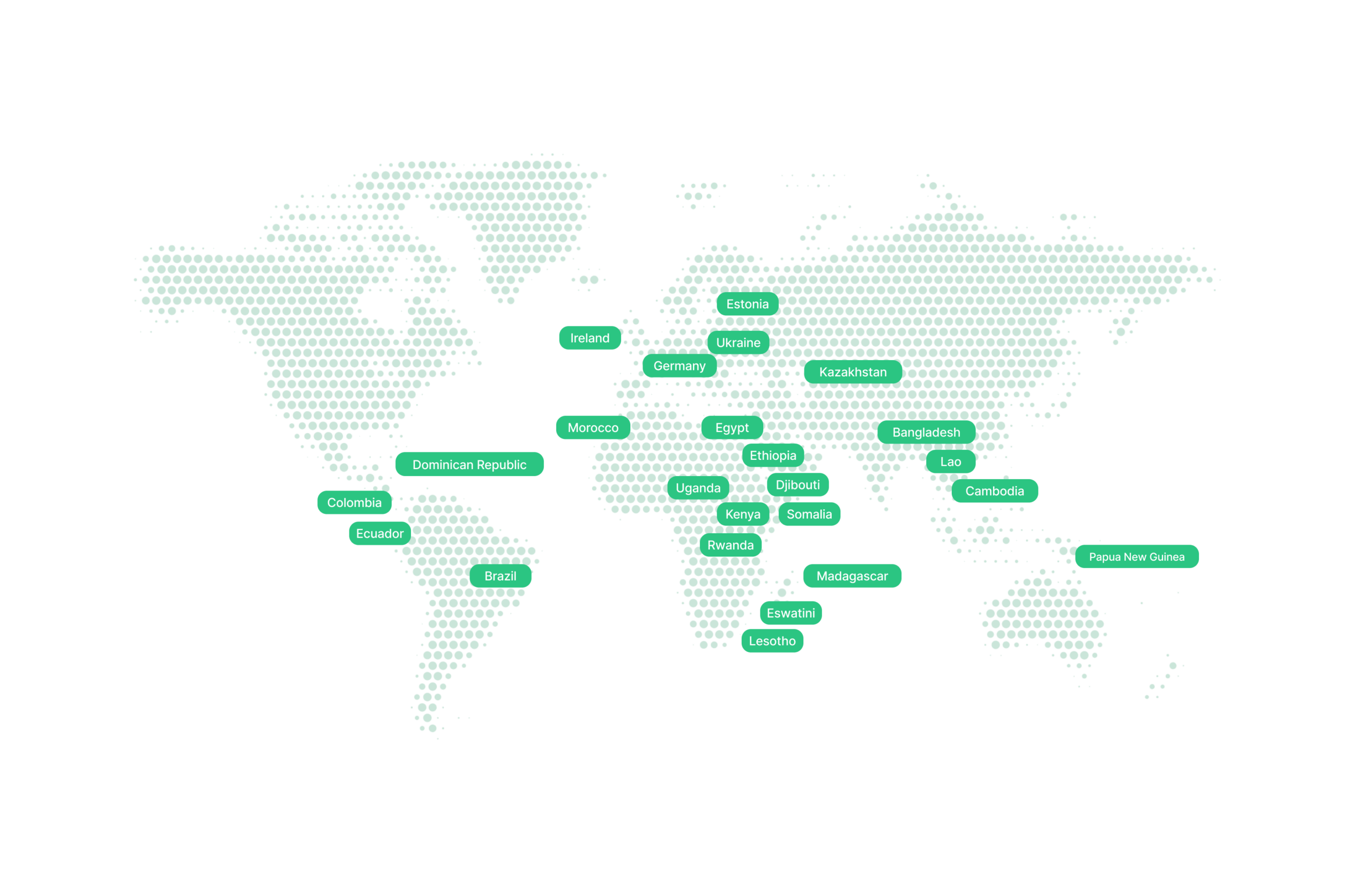
Adoption Reports
Have you used GovStack offerings? Let us know!
The GovStack Community builds open and free offerings. Everyone is free to use it.
With collecting usage reports we aim to give projects with it’s governments and implementers visibility and demonstrate the uptake and impact of GovStack’s offerings.
We call for our community to share the usage of GovStack offerings with us!
Please note, community entries are based on self-reported information with verifiable references. GovStack does not certify implementations but ensures reasonable evidence of real usage.
Projects' objectives in numbers
Projects grouped by country A-Z
Benin
X-Road BJ
Main objective: Software development
Description: Benin’s X-Road project is the country’s national interoperability layer for digital government: a secure data-exchange framework that lets ministries, agencies, registries, and service portals exchange information electronically instead of relying on paper documents or repeated manual checks.
In practical terms, the X-Road implementation project created three important building blocks:
1. A secure interoperability platform so government registries can exchange data with each other.
2. CatIS, a catalogue of interoperable systems, services, databases, and assets.
A3. national public services portal, service-public.bj, giving citizens and businesses one-stop access to e-services.
GovStack offerings: Information Mediator, PAERA
Software: X-Road
Stakeholders: ASIN (L’Agence des Systèmes d’Information et du Numérique), e-Governance Academy of Estonia; Cybernetica
Reporting organisation: ASIN (L’Agence des Systèmes d’Information et du Numérique)
Reporting date: 07.05.2026
X-Road BJ website
Brazil
X-Via Brazil
Main objective: Software development
Description: X-Road implementation in Brazilian states of Mato Grosso and Piaui. Motivated by a visit to Estonia, where the governor witnessed firsthand the benefits of X-Road, Piauí decided to accelerate the adoption of the secure exchange layer. In six months, Piauí not only implemented the technology supporting digital government, enabling system interoperability, but also established a citizen portal offering nearly 150 digital services.
GovStack offerings: Information Mediator Specifications
Software: X-Via
Stakeholders: Government of Piaui; Government of Mato Grosso
Reporting organisation: X-Via
Reporting date: 12.05.2026
X-Via Brazil News
Bhutan
Service Design and Architecture Training
Main objective: Capacity Building
Description: ITU delivered a country-focused activity in Thimphu on designing interoperable digital government services and developing a coordinated whole-of-government architecture.
GovStack offerings: Architecture, Implementation Playbook, PAERA
Software: –
Stakeholders: Government of Bhutan, ITU
Reporting organisation: ITU
Reporting date: 18.09.2026
Dominican Republic
Digital transformation program
Main objective: Policy making
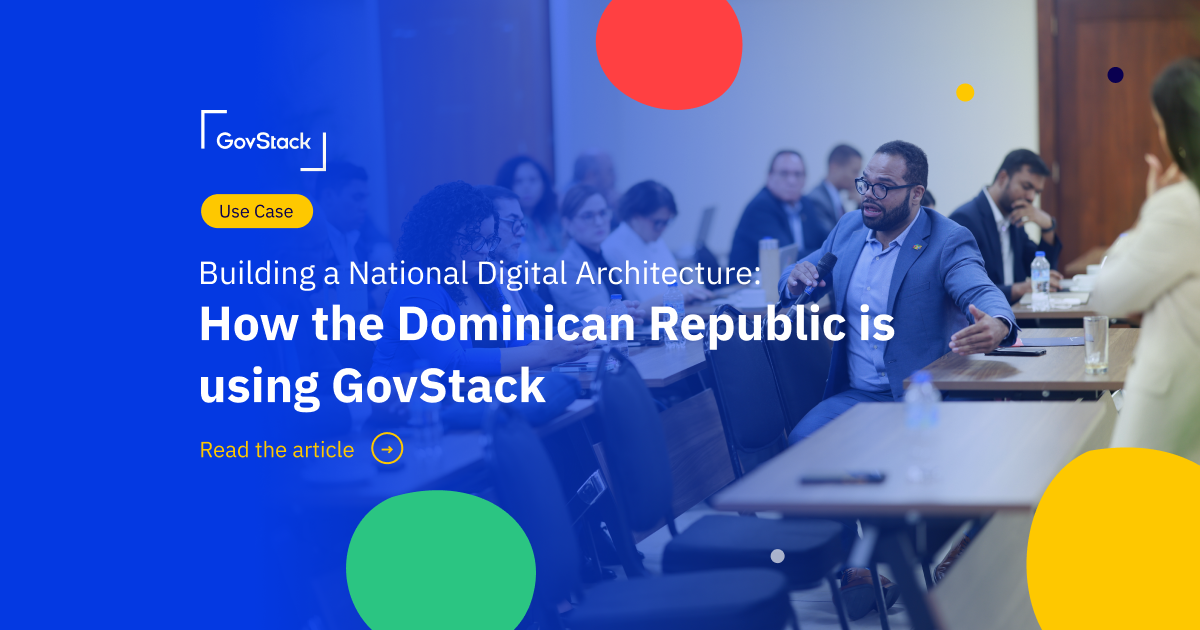
Description:GovStack principles are informing several parts of the Dominican Republic’s digital transformation program. This includes the development of a national DPI architecture that serves as a common reference across government while allowing sector-specific implementation in areas such as national human talent, planning and finance management, health and social development. Building on this foundation, they are designing shared digital capabilities for identity, data exchange, payments, notifications, digital signatures and verifiable credentials. They are also modernizing the national government portal toward a user-centered service platform and using GovStack principles when preparing technical requirements for future digital platforms and procurement. Rather than developing standalone systems, they are building their Digital Public Infrastructure program around open standards, interoperability, security, privacy and vendor neutrality.
GovStack offerings: PAERA, Implementation Playbook, Architecture Specifications
Software: –
Stakeholders:Ministry of Public Administration
Reporting organisation: Ministry of Public Administration
Reporting date: 12.08.2026
Article with more details
Egypt
Digitizing University Certificate Issuance and Tuition Payments
Main objective: Software development
Description: The University Student Digital Certificate Use Case, under the Egypt Service Package, is scoped, contracted, and in active pilot implementation by GIZ on the Digital Egypt Platform, with future plans for MCIT to scale it nationwide. This system orchestrates six core GovStack Building Blocks to automate the academic journey:
Identity BB: Enables secure authentication using national Digital Egypt credentials.
Information Mediator: Securely queries the Ministry of Education database to verify secondary school certificates instantly, avoiding manual uploads.
Workflow: Automatically evaluates criteria and routes university admissions.
Payment: Facilitates secure online registration fee processing.
Messaging: Sends real-time SMS/email enrolment alerts.
Digital Registries & Consent BB: Issues verifiable graduation certificates and lets students grant employers consent to verify credentials.
Following this GIZ-led pilot, MCIT will scale the solution across all universities.
GovStack offerings: Identity, Information Mediator, Workflow, Payment, Messaging, Digital Registries, Consent Specifications; Implementation Playbook
Software: —
Stakeholders: Ministry of Communication and Information Technology (MCIT), Cairo University
Reporting organisation: GIZ
Reporting date: 19.05.2026
GovStack-based capacity building for MCIT
Main objective: Capacity Building
Description: Capacity building is the core pillar of GIZ Egypt’s roadmap to establish a highly sustainable, self-reliant Digital Public Infrastructure (DPI) ecosystem using GovStack building blocks.
A key milestone was the intensive 10-day GovStack Deep Dive, equipping a cohort of 189 participants (134 male, 55 female). While specific program milestones focus on participants—including 55 participants joining the Community of Practice and 30 participants in the Training of Trainers—the overall program tracked a total of 441 training attendances.
This cumulative total of 441 attendances (including recurrent participants across multiple stages) achieved a 34.2% overall female attendance rate (151 attendances) and a 33.1%, in addition to the development of 18 localized e-learning modules.
GovStack offerings: All Building Block Specifications; Implementation Playbook
Software: —
Stakeholders: Ministry of Communication and Information Technology (MCIT)
Reporting organisation: GIZ
Reporting date: 19.05.2026
Ethiopia
Input Output Coefficient Application for Export Promotion
Main objective: Software development
Description: GovStack and GIZ Ethiopia supported the design, prototyping and development of a digital “Input-Output-Coefficent System” as part of the digitalisation of an export trade incentive system by the Ethiopian Ministry of Industry (MoI). In this use case, export-oriented industrial companies can enter the imports used for their production in just a few steps in order to receive a refund of the import duties incurred. This application makes both local SMEs and production facilities of international companies in Ethiopia more competitive. In addition, the government and business-related institutions can use the collected and published data to shape policy and promote value creation in the country in a targeted manner.
GovStack offerings: Registration and Workflow Specifications
Software: Joget
Stakeholders: Ethiopian Ministry of Industry (MoI), Ethiopian Customs Commission (ECC), Ethiopian Ministry of Innovation and Technology (MInT), PSD-E Project (GIZ Ethiopia), GIZ DTC Ethiopia, Thomas Wiemann, Daniel Homorodean, Alina Fleser
Reporting organisation: GIZ
Reporting date: 18.05.2026
GovStack Deep Dive & Rapid Prototyping WS Ethiopia
Main objective: Capacity building
Description: In 2025, GIZ conducted a GovStack Deep Dive and Rapid Prototyping Workshop in Ethiopia to explore how modular digital solutions can accelerate public service delivery and strengthen digital government capabilities. The project helped deepen understanding of GovStack’s building blocks and demonstrated how they can support interoperable and citizen-centric digital services within the Ethiopian context. By engaging stakeholders across multiple ministries the workshop highlighted practical opportunities for adopting GovStack architecture across government institutions and adapting its components to local needs and priorities. As part of the workshop, participants developed a prototype for the IOC (Input Output Coefficient) use case using the low-code platform Joget. The prototype demonstrated the technical feasibility of GovStack-based service development and showcased how services can be built faster and more efficient through reusable, modular digital components.
GovStack offerings: Implementation Playbook, Registration and Workflow Specifications
Software: Joget
Stakeholders: Ethiopian Ministry of Industry, Ethiopian Ministry of Innovation and Technology, Ethiopian Customs Commission, Joget, GIZ PSD-E Project, GIZ DTC Ethiopia, Wesley Brown, Farai Mutero, Daniel Homorodean
Reporting organisation: GIZ
Reporting date: 18.05.2026
Horn of Africa
Modular early warning system for extreme weather situations
Main objective: Software development
Description: In East Africa, collaboration with ICPAC (IGAD) and GIZ has led to the development of an early warning system (HUSIKA) for extreme weather, built using modular software components compliant to GovStack specifications. A demo is publicly testable on GovStack’s demo environment. The full implementation is designed to scale across countries. Here, GovStack’s contribution lies in enabling systems that can be adapted and extended over time, supporting institutions to respond more effectively to climate risks through flexible and interoperable infrastructure.
GovStack offerings: Architecture, Information Mediator and Messaging Specifications
Software: Kafka, RapidPro
Stakeholders: ICPAC (IGAD), Gofore, Bunifu Technologies, GIZ
Reporting organisation: GIZ
Reporting date: 30.03.2026
HUSIKA website
GovStack’s early warning demo
Ireland
Better Public Services with Digital Public Infrastructure
Main objective: Policy making, Software development
Description: Ireland’s Office of the Government CIO (OGCIO) has used GovStack as an important reference in shaping its vision for a modern, interoperable national eGovernment architecture. Rather than adopting GovStack as a prescriptive framework, Ireland has drawn on its modular building block approach to support the redesign of government digital services around shared capabilities such as digital identity, messaging, content management, data collection, payments and wallet. GovStack’s principles and technical specifications have been valuable reference points when defining the country’s shared digital capabilities, helping align cross-government architecture with principles of interoperability, reuse, and citizen-centric service delivery.
GovStack offerings: Architecture, Information Mediator, Wallet, Payment, Service Patterns and Messaging Specifications
Software: In-house developments
Stakeholders: Ireland’s Office of the Government CIO (OGCIO)
Reporting organisation: OGCIO
Reporting date: 24.08.2026
Building Blocks
Digital Public Services Plan 2030
Connecting Government 2030: A Digital and ICT Strategy for Ireland’s Public Service
Jordan
Digital Service Standard (DSS)
Main objective: Policy Making
Description: The project is developing Jordanian governmental digital services standards in line with international standards. GovStack Implementation Playbook and UX/UI Guidelines are used frequently as a reference in the procurement documents. Additionally, the project enhances the User Interface (UI)/ User Experience (UX) and provision of new informational services on the Official Jordanian Public Services Mobile Application and Web Portal (SANAD). The objective is to enhance accessibility, efficiency, and easiness in accessing government services by citizens.
GovStack offerings: Service Patterns, Implementation Playbook
Software: —
Stakeholders: Ministry of Digital Economy and Entrepreneurship (MoDEE), Improved Governance to Support Jordanian Reform Projects (PARtner)
Reporting organisation: GIZ
Reporting date: 19.05.2026
Public procurement documents
Kenya
Farmers’ Market Linkage (FML) Use Case
Main objective: Software development
Description: Bomet, Kericho, Nandi, Uasin Gishu, and Elgeyo Marakwet counties in Kenya are leveraging GovStack approach to integrate farmers, markets, and agricultural service providers, thereby enhancing productivity and minimizing post-harvest losses. The system is built on modular building blocks including consent management, registration, and e-market place.
Farmer can now access the market information through Mkulima bora app built on open-source and open standards to enable integration with critical government services such as Integrated Population Registration System (IPRS) for verification and authentication of farmers during onboarding. Equally farmers can access the farm inputs and extension service through the integrated AI module.
GovStack offerings: Cloud Infrastructure, Consent, E-Marketplace, Messaging, Registration, Workflow Specifications
Software: Integrated Population Registration System for consent management and registration
Stakeholders: Ministry of Information, Communications and Digital Economy, County Governments of Bomet, Kericho, Uasin-gishu, Nandi and Elgeyo-Marakwet, and Ministry of Agriculture, NanoComputing LTD and Superior Micro Systems
Reporting organisation: GIZ
Reporting date: 20.05.2026
FML platform
AI Conversational Chatbot (GovBot)
Main objective: Software development
Description: Kenya is exploring how artificial intelligence and GovStack’s reusable digital building blocks can improve the discoverability and accessibility of government services. Through the development of an AI Conversational Chatbot (GovBot), citizens can interact with government information using natural language through a simple conversational interface instead of navigating multiple websites or offices. The chatbot helps citizens quickly find information about public services, application requirements, government procedures, and service delivery points. Rather than spending hours searching across ministry websites or traveling physically to offices for clarification, users can ask questions in plain language and receive guided responses instantly. Using the GovStack approach, the chatbot integrates reusable and interoperable digital components instead of building isolated systems from scratch.
GovStack offerings: Architecture Specifications, AI Readiness Guide
Software: GovBot
Stakeholders: Directorate of eCitizen Services, THiNK, ITU, GIZ
Reporting organisation: GIZ
Reporting date: 19.05.2026
Kenyan eCitizen Chatbot
Malawi
Civil Service Recruitment
Main objective: Capacity development
Description: During a three-day training in 2025, the GovStack framework was introduced and applied to Malawi’s civil service recruitment process. Participants mapped the current analogue workflow (as-is), identified gaps and bottlenecks, and designed an improved digital process (to-be) using GovStack’s modular Building Blocks. This collaborative technical work produced an initial system architecture, outlined key data flows, and defined concrete next steps for integration and institutional ownership. The workshop significantly increased local understanding of how to apply GovStack methodology in practice and strengthened confidence in its relevance for Malawi’s digital transformation.
GovStack offerings: Implementation Playbook, Architecture, Registry, Workflow Specifications, Service Patterns
Software: –
Stakeholders: Civil Service Commission (CSC), AUDA-NEPAD, GIZ
Reporting organisation: GIZ
Reporting date: 26.05.2026
Mauritania
Standardisation Activties of Government Architecture and Service Design in Mauritania
Main objective: Capacity development
Description: GIZ supports Mauritania in establishing two national standards: One on government IT architecture to ensure interoperability, security, and efficient service development, and one on UX/UI design to create a unified Government Design System (called “Ijitil”) for consistent, accessible, and user-friendly digital services across ministries.
The assignment also includes the onboarding of the nascent Architecture and UX teams of MTNMA and inclusion in global (design) communities.
GovStack offerings: Architecture Specifications, Service Patterns, Implementation Playbook
Software: –
Stakeholders: Ministry of Digital Transformation, Innovation and Modernisation of the Administration (MTNIMA), Stefan Draškić, Jeremi Joslin
Reporting organisation: GIZ
Reporting date: 29.04.2026
Mongolia
Inter-agency information exchange based on GovStack architecture
Main objective: Capacity development
Description: ITU co-organized a high-level discussion with Mongolia’s digital-development ministry and parliamentary bodies to explore how the GovStack approach can strengthen coordination and information exchange across government institutions.
GovStack offerings: Architecture Specifications, PAERA (Government Architecture Guide)
Software: –
Stakeholders: Ministry of Digital Development, Innovation and Communications, ITU
Reporting organisation: ITU
Reporting date: 18.09.2026
Mozambique
Women In GovTech Challenge Mozambique
Main objective: Capacity Development
Description:From Challenge to Prototype — After 5 intense and inspiring days, the participants of the first #WomenInGovTechChallengeMozambique presented their service redesign concepts to the jury — and with that, the challenge came to a close. Four teams of experienced women from Mozambique’s public sector took the stage, each presenting a bold vision for a digitally transformed public service: from birth registration and social support for newborns, to territorial tax payment and access to employment. The level of work that came together in just five days was remarkable.
This edition of the challenge builds on GovStack’s global Women in GovTech training and therefore uses the Implementation Playbook, service patterns and architecture specifications as training material.
GovStack offerings: Implementation Playbook, service patterns, architecture specifications
Software: –
Stakeholders: Cidade De Maputo, CEDSIF, Centro de Investigação e Transferência de Tecnologias para o Desenvolvimento Comunitário (CITT), ITU, GIZ
Reporting organisation: GIZ
Reporting date: 12.08.2026
LinkedIn Report
Rwanda
Plantation Tree Tracker: Digital Forestry Management System for Rwanda
Main objective: Software development
Description: The Plantation Tree Tracker is a web-based digital platform developed to support the Rwanda Forestry Authority (RFA) and the Ministry of Environment in managing tree planting and nursery operations across Rwanda. The system enables forestry officers to register tree species, monitor nursery production, track seedling availability, process seedling requests, and monitor tree planting progress nationwide. GovStack supported the primary development of the platform and applied the GovStack Workflow Building Block specifications in the system design and implementation. The solution digitalised previously manual processes and introduced a centralised mechanism for monitoring nurseries and forestry activities across the country. The platform allows officials to remotely monitor government and private nurseries, assess production capacity, and track national tree planting efforts. More than 50 forestry officials responsible for tree management received training and are actively using this.
GovStack offerings: Workflow Specifications and Implementation Playbook
Software: –
Stakeholders: Rwanda Forestry Authority (RFA) Ministry of Environment, Rwanda
Reporting organisation: GIZ
Reporting date: 01.06.2026
GovStack blog article
Digital Subsidy Management System for Clean Cookstove Distribution in Rwanda Refugee Camps
Main objective: Software development
Description: The Results-Based Financing (RBF) Application is a digital solution developed to support the distribution of subsidized clean cookstoves to refugee households in Rwanda. The project was implemented through collaboration between GIZ clusters working on climate, energy, digital transformation, and humanitarian development together with Practical Action. The application digitalizes the eligibility verification and sales process for clean cookstoves. Using GovStack-inspired Registry and Workflow capabilities implemented through Joget, the system enables stove sellers to verify beneficiary eligibility, validate SMS-based subsidy tokens, and confirm whether a household has already received a subsidized cookstove. This prevents duplicate claims while ensuring subsidies reach eligible beneficiaries. The solution addresses a critical challenge whereby many refugee households were unable to afford improved cookstoves and relied on inefficient and unsafe cooking methods.
GovStack offerings: Digital Registries, Workflow
Software: Joget
Stakeholders: –
Reporting organisation: GIZ
Reporting date: 01.06.2026
GovStack blog article
Government Website Modernisation Using the GovStack Content Management Building Block
Main objective: Software development
Description: The project supported the development and deployment of more than 200 government websites using principles and capabilities aligned with the GovStack Content Management Building Block. The initiative aimed to improve citizens’ access to government information through secure, standardized, and user-friendly digital platforms.
GovStack offerings: Content Management System (CMS) specifications
Software: Typo3
Stakeholders: Ministry of ICT
Reporting organisation: GIZ
Reporting date: 01.06.2026
GovStack spotlight article
GovStack Workflow Building Block enables G2G Services
Main objective: Software development
Description: The Rwanda Information Society Authority (RISA) launched the Joget Low-Code Platform for the implementation of G2G services. This decision is based on a thorough analysis in cooperation with GovStack to decide on the most suitable software solution for the Workflow Building Block. This milestone marks a significant leap in Rwanda’s journey toward digital transformation, paving the way for innovation and efficiency across public services.
GovStack offerings: Workflow specifications
Software: Joget
Stakeholders: Rwanda Information Society Authority
Reporting organisation: GIZ
Reporting date: 01.06.2026
GovStack Deep Dive in Kigali, Rwanda
Main objective: Capacity building
Description: In close cooperation with and at the invitation of Ministry of ICT and Innovation and Rwanda Information Society Authority, a GovStack deep dive workshop was held in Kigali, Rwanda, on October 8–9, 2024. GovStack experts and Rwandan CDOs and technical experts explored the GovStack building blocks and architecture and their potential to support Rwanda’s future DPI development. The participants actively developed road maps for relevant use cases, making use of GovStack.
GovStack offerings: Consent, Digital Registries, Information Mediator, Workflow, specifications and PAERA, Demo Ennviornment (Sandbox)
Software: Joget
Stakeholders: Ministry of ICT and Innovation, Rwanda Information Society Authority, Arxia
Reporting organisation: GIZ
Reporting date: 01.06.2026
GovStack blog article
Samoa
GovStack Introduction and Architecture Training
Main objective: Capacity Building
Description: ITU delivered a national workshop in Apia to build government capacity in applying GovStack and establishing secure, coordinated data exchange across public institutions.
GovStack offerings: Architecture, Implementation Playbook, PAERA
Software: –
Stakeholders: Government of Samoa, ITU
Reporting organisation: ITU
Reporting date: 18.09.2026
Somalia
High School Certificate System (HSC) Use Case
Main objective: Software development
Description: For High School Certificate System (HSC), GovStack integrates predefined open and interoperable building blocks, including Registration, Identity Verification, and Consent (eAqoonsi NIRA ID), Payments (SomaliPay and GovPay) and Digital Registries (MOECHE Examination System).These building blocks enabled Somalia governments to build HSC service faster and more efficiently through a modular and reusable approach instead of developing new systems from scratch.
The HSR service enables high school students to access verifiable digital certificates through the HSC portal. Before the services, students had to travel long distances and wait weeks – sometimes months – to get a stamp and a signature on their certificates. With the launch of the High School Certificate System (HSC), students can now apply for their certificates online, securely pay fees, and receive a verified digital certificate instantly – all without the need for long trips or manual paperwork.
GovStack offerings: Architecture, Registration, Registry, Workflow, Consent, Identity Specifications
Software: Registration, Identity Verification, and Consent (eAqoonsi NIRA ID), Payments (SomaliPay and GovPay) and Digital Registries (MOECHE Examination System).
Stakeholders: Ministry of Communication and Technology (MoCT), Joget, ITU, GIZ
Reporting organisation: GIZ
Reporting date: 19.05.2026
Content Management System (eGov Portal)
Main objective: Software development
Description: Develop using GovStack approaches and principles, the CMS build on TYPO3, an easy-to-use, and flexible open-source has become a a game-changer in digital government services. It adopts a modular and reusable digital architecture (Building Blocks), allowing Somalia to have a standardize government websites for consistency and transparency. It has also improved accessibility by providing service categorization and enhance efficiency through automated updates and user feedback mechanisms. It’s high level of interoperability ensure scalability for future expansion.
The Somali government, in collaboration with GovStack, has introduced a standardized Content Management System (eGov Portal). The eGov portal provides a one-stop-shop where citizens can easily access information about government services such business registration, and high school certificate process in three different languages; Somali, Arabic and English
GovStack offerings: Implementation Playbook, Architecture, Cloud Infrastructure, Content Management System (CMS), Workflow Specifications
Software: Typo3
Stakeholders: Ministry of Communication & Technology (MoCT), TYPO3 Association, GIZ, ITU
Reporting organisation: GIZ
Reporting date: 19.05.2026
Somalia eGov Portal
South Africa
GovStack Architecture and DPI Training
Main objective: Capacity Building
Description: ITU Academy organized a course in Johannesburg, coordinated with Witwatersrand University, to strengthen participants’ understanding of GovStack architecture and digital public infrastructure. It included the Information Mediator Building Block and a USCT case study.
GovStack offerings: Architecture, Information Mediator, PAERA
Software: –
Stakeholders: Witwatersrand University, ITU
Reporting organisation: ITU
Reporting date: 18.09.2026


